
Roof Repair FAQ · Frankfort, KY

Commercial Roof Repair Questions in Frankfort

Plain Answers on Leaks, Seams, Panels, Permits, and Cost

These are the commercial roof repair questions Frankfort building owners and facility managers ask most, answered for flat, metal, and industrial roofs.

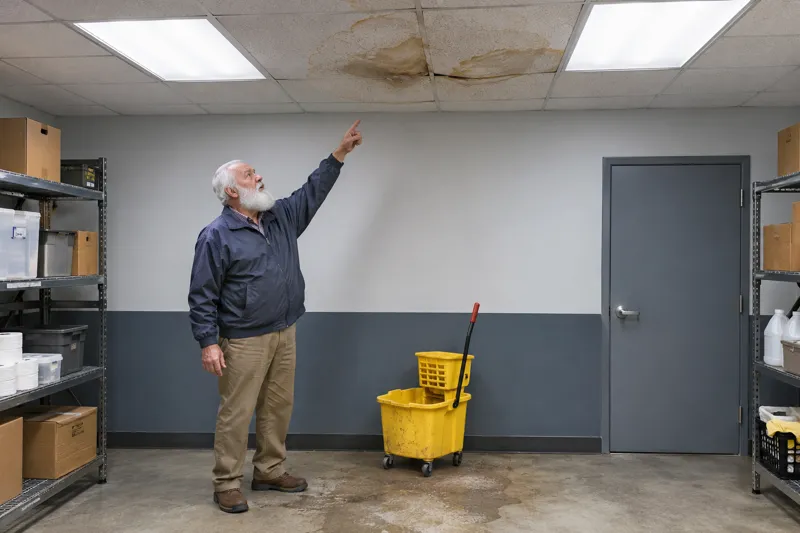
Water stain and drip on a ceiling inside a commercial building
Inside the Building · Ceiling Leak
Start Here

Commercial Roof Repair Questions in Frankfort by Topic

Each answer below covers commercial roof repair questions Frankfort owners raise during roof walks, grouped by roof type and topic.

Commercial roof repair is the work of finding and fixing leaks, open seams, failed flashing and storm damage on business, industrial and farm buildings while the rest of the roof stays in service. Frankfort Commercial Roof Repair fixes flat and metal roofs across Frankfort and Franklin County, Kentucky, plus surrounding towns like Lawrenceburg, Owenton, Eminence and New Castle.

By Roof Type

Frankfort Commercial Roof Repair Questions on Roof Types and Repairs

Roof Repair Basics

Should a damaged commercial roof be repaired, restored or replaced?

How much of the roof is wet or worn out decides between repair, restoration and replacement. Small, local damage over dry insulation calls for repair.

PathRoof conditionWork involved
RepairOne or a few leaks, dry insulation, intact fieldPatch seams, reflash curbs, fix drains
RestoreAging but dry membrane or metal with many small failuresSeam and fastener work across the roof plus a fluid-applied coating
ReplaceSaturated insulation over large areas, failing deck, brittle membraneTear-off or recover with a new roof system

Moisture readings sort roofs into these paths. Patching over saturated insulation traps water under new material, so wet areas get cut out and replaced even during a repair.

Related: flat roof repair in Frankfort

Why does the drip inside often sit far from the actual roof opening?

Water entering a commercial roof travels along deck flutes, purlins, insulation joints and conduit before it drips, so the ceiling stain can sit many feet from the actual opening.

Common paths:

  • Steel deck flutes channel water downslope toward walls
  • Purlins on metal buildings carry drips sideways to a low point
  • Insulation board joints spread water under the membrane
  • Pipes and conduit drop water at hangers and fittings

Leak tracing starts on the roof above the stain and works upslope, checking seams, curbs and penetrations along the path. Marking stains on a floor plan speeds that search.

Related: commercial roof leak repair

What separates a temporary roof patch from a permanent repair?

A temporary patch slows water long enough to protect the building, while a permanent repair rebuilds the failed detail with materials that match the roof.

Point of differenceTemporary patchPermanent repair
PurposeStop active water nowRestore the roof detail
MaterialsRoof cement, tape, wet-surface sealantMatching membrane, welded or primed patches, new flashing, panel sections
Surface prepMinimal, often on a wet roofCleaned, dried and primed
Service lifeUntil conditions allow a proper fixMatches the surrounding roof
Later workOften removed before the permanent fixBecomes part of the roof

Roof cement smeared on a single-ply membrane can damage the sheet and blocks later welding, so that material gets cut out when the permanent repair goes in.

What should building staff do the moment a roof starts leaking?

Building staff should protect people and stock first, then record the leak for the repair crew. Climbing onto a wet roof during a storm puts staff at risk, so roof checks wait for safe conditions.

Steps inside the building:

  • Move inventory, electronics and files away from the drip
  • Set buckets and plastic sheeting, and mark wet floors
  • Shut off power to fixtures near the water if it is safe to do so
  • Photograph the stain, ceiling tile and time of day
  • Note wind direction and rain intensity during the leak

That record points crews toward the likely source, such as a clogged drain, an open lap or a curb flashing.

Flat Roof Repair Questions

What causes most leaks on flat commercial roofs?

Flashing at curbs, walls and drains is where most flat roof leaks start, with seams and punctures close behind. Water sits longer on low-slope roofs, so any weak detail gets tested with every rain.

Frequent sources:

  • Base flashing pulling away from parapet walls
  • Open laps at seams and T-joints
  • Clogged drains and scuppers that let water climb flashings
  • Punctures from dropped tools, hail or foot traffic
  • Pitch pans with shrunken filler around pipes

A full walk of the roof finds secondary problems close to the main leak. Fixing all of them in one visit saves repeat calls.

How are open seams repaired on TPO, EPDM, PVC and modified bitumen roofs?

Seam repairs follow the membrane type, since each sheet bonds in its own way.

MembraneSeam repair method
TPOClean with membrane cleaner, then hot-air weld a cover patch over the lap
PVCClean and reweld, with a cover strip on wide openings
EPDMClean, prime and apply pressure-sensitive seam tape or a cover strip
Modified bitumenReheat or cold-bond the lap, then add a granulated cap patch
Built-upCut out blistered plies, rebuild with felts and bitumen

Older TPO can resist welding as its surface weathers, which a test weld on a small area reveals before the patch goes on. Every seam repair extends past the opening on each side so the patch bonds to clean, firm membrane.

Can blisters on a flat roof be repaired?

Repairing a blister on a built-up or modified bitumen roof means opening it with a cut, drying the area and patching over the cut. Small, firm blisters away from traffic paths are often left alone and watched.

Repair order for an active blister:

  • Cut an X or a square through the blister
  • Dry the insulation and plies underneath
  • Re-adhere the flaps with bitumen or adhesive
  • Cover with a patch that overlaps the cut on all sides

Blisters form when moisture or air trapped between plies expands in summer heat. Many blisters across the field point to moisture in the system, which moves the conversation toward restoration or replacement.

What can be done about ponding water on a flat roof?

Ponding on a flat roof gets fixed by restoring the path to the drains, starting with the simplest cause.

CauseRepair
Clogged drain or strainerClear debris, replace the strainer
Drain set above the low spotAdd a sump or lower the drain bowl
Deck sag between joistsStructural check, then tapered fill
Missing crickets behind curbsAdd tapered crickets to divert water
Undersized scupper or gutterEnlarge the outlet or add an overflow scupper

Standing water adds weight, speeds membrane wear and feeds algae along seams. Water still standing a couple of days after rain marks the spots that need tapered fill or drain work.

What is the repair for punctures and foot traffic wear on a membrane roof?

Punctures get a patch of matching membrane that extends past the hole on every side, welded on TPO and PVC or taped on EPDM. When water has already passed through, the wet insulation underneath gets cut out and replaced first.

Common puncture sources:

  • Dropped screws and tools around rooftop units
  • Hail strikes on unprotected areas
  • Service ladders and equipment dragged across the sheet
  • Sharp metal shavings left after HVAC work

Walkway pads along service routes and a cleanup check after each HVAC visit cut down on new punctures. Probing the area around each patch finds nearby damage hidden under dirt.

Commercial Metal Roof Repair Questions

How are leaking screws on a metal roof repaired?

Leaking screws on an exposed-fastener metal roof get repaired by replacing the worn screw and washer, upsizing it when the hole has stripped. Sun and temperature swings break down the rubber washers until water gets past them.

Fastener repair steps:

  • Remove the failed screw and clean the panel around the hole
  • Drive an oversized or longer screw with a new washer into solid purlin
  • Seal the head with a compatible sealant
  • Check nearby screws along the same purlin line

Screws driven too tight crush their washers, and loose ones leave a gap, so crews set each one snug and flat.

How are end laps and side laps on metal panels fixed?

End laps and side laps on metal panels are fixed by tightening or adding stitch screws and resealing the overlap with butyl tape or lap sealant. End laps leak more often because water runs straight into them on the downslope side.

  • At end laps, crews lift the upper panel edge where they can, clean out old sealant and set fresh butyl tape before re-screwing
  • Along side laps, stitch screws at the ribs pull the panels back together
  • Over long, worn laps, a reinforced seam tape or fabric and sealant bridges the joint

Panels that shift at the laps point to loose purlin screws, which get fixed first.

Can rusted metal roof panels be patched?

Rusted metal panels can be patched when the rust is local and the purlins underneath are solid, while widespread rust-through calls for new panels.

Rust conditionRepair approach
Surface rustWire brush, prime and seal
Pinholes at laps or fastenersClean, prime, cover with sealant and fabric
Holes larger than a fistCut a metal patch with overlap, set in sealant and screw
Rust-through across a panelReplace the panel section
Rusted purlin or eave strutStructural repair before any panel work

Eave panels and gutter lines rust first because leaves and standing water keep them wet. Matching the profile and gauge of a replacement panel keeps the ribs nesting tightly with the old ones.

How are gutters, ridge caps and skylight panels repaired on metal buildings?

Gutters, ridge caps and skylight panels each leak in their own way on metal buildings, and each gets a targeted repair.

DetailCommon failureRepair
Box and eave guttersRusted seams, sagging hangersReseal seams, add hangers, replace rusted sections
Ridge capsLoose screws, missing closuresRefasten, replace foam closures, seal laps
Skylight panelsCracks, yellowing, loose lapsReplace with matching translucent panels
Wall-to-roof trimGaps at end wallsNew trim and sealant

Skylight panels look solid from above, so crews mark or screen them before walking the roof. Gutter repairs pair with downspout checks, since a clogged outlet sends water back under the eave panels.

When does a metal roof need new panels instead of spot repairs?

A metal roof needs new panels once leaks keep turning up at fresh screws and laps faster than crews can fix them one at a time. Failures scattered across the whole roof show that the washers, sealants and steel have worn out together.

Signals to step back and look at the whole roof:

  • Leaks returning at different screws each season
  • Rust spreading from laps into the panel field
  • Many skylight panels cracked at once
  • Purlins showing rust from the inside

New panels go in where rust or damage is worst, and the remaining runs get fresh fasteners, new closures and resealed laps during the same project.

Commercial Roof Leak Repair Questions

How do roofers trace a commercial roof leak to its source?

Roofers trace a commercial roof leak by matching interior stains to roof features above them, then checking every seam, curb and penetration upslope of that spot.

Tracing methods:

  • Interior mapping of stains, drips and wet insulation
  • Visual roof walk at flashings, laps and drains
  • Moisture meters and probes on the membrane
  • Infrared scans at dusk to show wet insulation
  • Controlled water testing, one detail at a time

Water testing starts low and moves up, so each detail gets tested alone. Leaks that appear only in wind-driven rain often trace to wall flashing or coping above the roof line.

Where do leaks usually start on each type of commercial roof?

Each roof type has its own weak points, so leak repair starts with the details that fail most on that system.

Roof typeUsual leak sources
TPO and PVCSeam edges, curb corners, pipe boots
EPDMSeam tape edges, shrinkage at walls, flashing corners
Modified bitumenLap edges, blisters, torch-applied flashing at walls
Built-upCracked flashing, blisters, pitch pans
R-panel metalFastener washers, end laps, ridge caps
Standing seam metalPenetrations, end laps, trim at walls

Drains and scuppers cause leaks on every low-slope type when debris backs water up over the flashing. Knowing the system narrows the search before anyone starts cutting.

Related: metal roof repair for screws, laps and rusted panels

Why do curbs, pitch pans and pipe boots leak?

Curbs, pitch pans and pipe boots leak because they join the roof to things that move, vibrate or age at different rates than the membrane.

  • Curbs around rooftop units lose sealant at corners and under the unit flange
  • Pitch pans hold filler that shrinks and cracks, leaving a gap at the pipe
  • Pipe boots split at the upper band or loosen at the clamp
  • Counterflashing on walls pulls away when fasteners rust

Repairs swap pitch pans for prefabricated boots or refilled sealant pockets, reflash curbs with new membrane, and replace split boots. Each fix gets checked during the next heavy rain.

How are leaks around roof drains and scuppers fixed?

Leaks at roof drains and scuppers get fixed by resetting the membrane into the drain bowl or scupper sleeve and replacing any cracked or rusted parts.

Drain and scupper repairs:

  • Clean the drain bowl and replace missing clamping ring bolts
  • Install a new drain insert where the old bowl is cracked
  • Swap rusted scupper sleeves for new metal flanges set in the membrane
  • Strip in flashing around the sleeve or clamp area
  • Restore strainers to keep leaves out

Drains clogged by leaves force water up against flashing, which turns a drain problem into a wall leak. Fall cleanouts head off much of that.

Can a roof leak be fixed while it is still raining?

A temporary patch can go on during rain to slow a leak, and the permanent repair waits for a dry roof because primers, tapes and welds bond only to clean, dry surfaces.

Wet-weather options:

  • Wet-surface sealants and tapes rated for damp membrane
  • Plastic sheeting weighted over an open area during work
  • Clearing drains and scuppers that are holding water

Crews return once the roof dries to remove the temporary material and rebuild the detail. Lightning and high wind keep everyone off the roof until the storm passes, even with water coming in.

Industrial Roof Repair Questions

What makes industrial roof repair different from other commercial repair?

Industrial roof repair works around process exhaust, heavy equipment and production schedules that office and retail roofs rarely face.

Conditions crews meet on plant roofs:

  • Grease, oil or chemical residue around exhaust fans
  • Heat from ovens and process vents
  • Rooftop units, ductwork and piping crowding the membrane
  • Large roof areas with long drain lines
  • Safety rules for plant access, lockout and hot work

Repairs use membranes and sealants rated for the exposure, and every roof visit follows the plant's safety and access rules.

How are roofs repaired around exhaust fans and process vents?

Roofs around exhaust fans and process vents get repaired by removing contaminated membrane, replacing it with a material that resists the residue, and catching future discharge before it reaches the roof.

ProblemRepair
Grease-softened EPDM or TPOCut out and replace with a compatible PVC or KEE section
Cracked fan curb flashingReflash the curb, add counterflashing
Heat-damaged membrane near ventsReplace and add heat shields or pavers
Residue at drainsClean drains, add filtration or containment

Grease containment boxes under kitchen and process fans keep residue off the membrane. Matching chemical resistance to the plant's exhaust list keeps the patch from failing the same way.

How is industrial roof repair scheduled around production?

Industrial roof repair gets scheduled around shift changes, shutdowns and deliveries, with plant staff deciding when intakes, fans and lines can go down.

Scheduling points:

  • Torch and hot-air work need the plant's hot work signoff and a fire watch
  • Fresh-air intakes beside the repair area get closed off
  • Roof access runs through plant security and safety training
  • Crane or forklift use for material is booked ahead
  • Interior areas under repairs get protection from falling debris

Small leak repairs fit into a single visit, while larger areas run in phases so the roof stays watertight overnight.

What does a storm damage check on an industrial roof cover?

A storm damage check on an industrial roof covers the perimeter, rooftop equipment and the membrane field, since wind and hail hit each one differently.

AreaWhat crews look for
Edge metal and copingLifted or bent sections, loose cleats
Membrane fieldHail bruises, tears, flutter damage at fasteners
Rooftop unitsDented panels, displaced curbs, loose access doors
Skylights and smoke ventsCracked lenses, broken frames
DrainsWind-blown debris clogging strainers

Dated photos support insurance claims, so they come before any temporary work covers the damage. Large roofs get walked in a grid so every section gets covered.

How are large industrial roofs kept in repair over time?

Large industrial roofs stay in repair through scheduled inspections, a leak log and quick fixes to small problems before they spread.

Upkeep routine:

  • Roof walks each spring and fall, plus after major storms
  • Drain and scupper cleanout before leaf season ends
  • Seam probing near rooftop units and high-traffic paths
  • Marked roof plans showing every repair with date and method
  • Walkway pads replaced where worn through

The repair log shows when one area keeps failing, which helps owners plan restoration or replacement of that section ahead of time.

Question About Your Own Roof?

The answers here cover the common cases. Call us about the stain, seam, or panel you are looking at, and we will talk it through.

Call Us
Local and Cost

Frankfort Commercial Roof Repair Questions on Weather, Permits, and Cost

Weather, Permits and Codes in Frankfort

Does a commercial roof repair need a permit around Frankfort?

Permit needs for roof repair turn on the scope and on the office that covers the parcel, and small patches and full reroofing get treated differently. Call before work that replaces decking, adds curbs or covers large areas.

TownCountyWhere to ask about repair permits
FrankfortFranklinFranklin County Planning, Zoning and Building Codes, with parcels inside city limits checked through the City of Frankfort
LawrenceburgAndersonCity building inspector, whose page lists roofs among permitted commercial work
OwentonOwenOwen County local inspector or state inspector
EminenceHenryHenry County local inspector or state inspector
New CastleHenryHenry County local inspector or state inspector

Franklin County set new permit and review fees through Ordinance 1-2025, so check current fees when a repair needs a permit.

How does Kentucky's building code treat roof repairs?

Kentucky's 2018 building code, which uses the 2015 International Building Code as its base, sets the rules for commercial roofs statewide, and the local inspector decides when a repair grows large enough to count as reroofing.

On a repair, inspectors look at how new parts fit the existing roof assembly. A patch membrane has to suit the roof's fire-rated assembly, a reflashed curb has to reach proper height above the finished surface, and replaced edge metal or coping has to be fastened against wind.

The Kentucky Department of Housing, Buildings and Construction posts the editions it currently enforces, and those change over time.

Which storms cause the most roof leaks around Frankfort?

Thunderstorms with wind-driven rain and hail cause most sudden commercial roof leaks around Frankfort, while long soaking rains expose slow drains and worn seams. NWS climate data for Frankfort shows roughly 47 inches of rain and melted snow in a typical year.

Storm typeCommon roof damage
Wind-driven rainWater pushed under coping, laps and wall flashing
HailBruised membrane, cracked skylights, split fastener washers
High windLifted edge metal, peeled perimeter membrane
Long soaking rainPonding, overflowing gutters, drain backups

Hail turned up across central Kentucky in 2024, according to the NWS Louisville annual climate summary. A roof check after each major storm catches damage before the next rain.

What winter roof problems show up on commercial buildings in central Kentucky?

Freeze-thaw cycles, ice in gutters and snow load cause most winter roof problems on commercial buildings in central Kentucky. Louisville's airport dropped to 3°F on January 20, 2024, according to NWS Louisville.

Winter leak patterns:

  • Water freezing in open laps and pushing them wider
  • Ice dams at metal eaves backing water under panels
  • Frozen drains sending meltwater over flashing
  • Brittle older membranes cracking where they flex

Many winter repairs start as temporary patches, with permanent work done on a dry, mild day when sealants and primers can cure.

Cost, Value and Taxes

What makes one commercial roof repair cost more than another?

Access, the number of problem spots and how much wet material comes out affect the cost of a commercial roof repair more than the patch material does.

Cost factors:

  • Roof height, lift or crane needs, and hatch access
  • Number of leaks and details involved
  • Wet insulation that has to be cut out and replaced
  • Membrane type and whether matching material is on hand
  • Storm timing, when temporary work comes before the final fix
  • Rooftop units that need an HVAC tech to move or shut down

A single curb reflash costs far less than tracing several slow leaks across a large roof.

Related: industrial roof repair

When does repeated repair cost more than restoration or replacement?

Repeated repair costs more than restoration or replacement once leaks keep moving to new spots and wet insulation keeps spreading.

SignWhat it suggests
Same area patched several timesThe detail needs rebuilding, beyond patching
New leaks each season in new placesSeams or fasteners aging across the whole roof
Wet insulation growing on scansReplacement of that section
Brittle or shrinking membranePatches failing to bond

A repair log with dates, locations and costs makes the comparison clear. Owners can then budget restoration or replacement ahead of a failure.

Do commercial roof repairs count toward Section 179?

IRS Publication 946 lists roofs on existing nonresidential buildings as eligible Section 179 property, and a CPA sorts each roof job into a repair or an improvement. For tax years starting in 2026, Publication 946 caps the Section 179 deduction at $2,560,000, reduced dollar for dollar after $4,090,000 of qualifying property goes into service.

Itemized invoices that separate flashing work, membrane patches, panel replacement and insulation make that sorting easier for the CPA.

Questions by Town

How does Kentucky River flooding affect roof repairs in Frankfort?

Kentucky River flooding affects Frankfort roof repairs by closing roads and lots that crews need for ladders, lifts and material. Franklin County lists flood stage at Frankfort as 31 feet, with KY 420 closing at 38 feet and Bellepoint cut off at 43 feet.

During and after high water:

  • Repairs on riverside buildings wait for access roads to reopen
  • Temporary patches hold until lifts can reach the eaves
  • Interior water marks from flooding get separated from true roof leaks
  • Drains and downspout outlets at grade get cleared of silt

Owners near the river gain from a roof check ahead of spring high water.

Which utility serves a Frankfort building, and why does it matter for roof repair?

The Frankfort Plant Board, Kentucky Utilities and Blue Grass Energy each serve commercial meters around Frankfort, and the meter's location decides which one applies. The provider matters when a leak repair at a rooftop unit curb, service mast or weatherhead needs power shut off.

ProviderOwnershipCounties near Frankfort
Frankfort Plant BoardCity-ownedFranklin County, with service reaching into Woodford and Shelby
Kentucky UtilitiesShareholder-owned companyLists Franklin, Anderson and Owen in its tariff
Blue Grass EnergyMember-owned cooperativeFranklin, Anderson and Woodford

The meter tag names the provider. An electrician handles any disconnect so roofers can reflash the mast boot and curb safely.

What should Lawrenceburg distillery warehouse owners know about roof repair?

Distillery warehouses around Lawrenceburg need roof repairs planned around airflow and older framing, because the buildings age barrels and often sit on wood frames. The state heritage listing for Wild Turkey Distillery in Anderson County notes that its warehouses stand on stone foundations, with wood framing and metal siding.

Repair points on these roofs:

  • Ridge vents and roof openings kept clear so warehouse airflow stays the same
  • Wood rafters and purlins checked before crews walk the panels
  • Rusted nails or screws at panel laps reset into solid wood
  • Long gutter runs cleared and resealed at seams

Lawrenceburg's city building inspector handles permits inside city limits when repairs grow into larger roof work.

Related: roof repair in Lawrenceburg

How do Owenton's utilities and rural sites shape roof leak repairs?

Owenton is the Owen County seat and home to Owen Electric, a cooperative that is an owner-member of East Kentucky Power Cooperative, while Kentucky Utilities also lists Owen County in its tariff. A leak at a service mast or rooftop unit means calling whichever one the meter tag names before the disconnect.

Sites outside town sit farther from material suppliers, so crews load up for the likely failures on the first trip:

  • Patch membrane matched to the roof type
  • Panel stock, closures and stitch screws for metal buildings
  • Sealants and primers rated for the season
  • Drain strainers and clamping ring bolts

Related: roof repair in Owenton

What do older Eminence commercial buildings need from a roof repair?

Older commercial buildings in Eminence need repairs that respect masonry walls and long-serving roof edges. The town grew around a railroad finished in 1849, was incorporated in 1851, and keeps City Hall in the Old Depot, according to the city's history page.

On older masonry buildings, leaks tend to start at:

  • Parapet copings with open joints
  • Counterflashing set into crumbling mortar
  • Through-wall scuppers rusted at the sleeve
  • Built-up roof flashing cracked along the wall base

Repairs reset or replace coping and counterflashing before patching the roof membrane. Henry County's local or state building inspector reviews larger repair scopes in Eminence.

Related: roof repair in Eminence

Who reviews larger roof repairs in New Castle?

Larger roof repairs in New Castle go to either the Henry County local building inspector or the state building inspector, the two names on the state's Henry County contact sheet. New Castle is the Henry County seat, and the county also runs a Planning and Zoning office.

Repairs that tend to need that review:

  • Deck replacement under a leaking area
  • New curbs or relocated rooftop units
  • Large sections of new membrane or metal panels
  • Structural work at sagging purlins or joists

For small patches at a seam or pipe boot, ask the inspector whether a permit applies before work starts.

Related: roof repair in New Castle

What other towns near Frankfort get roof repair service?

Frankfort Commercial Roof Repair also handles leaks and damage on commercial, industrial and farm buildings in these smaller communities.

TownCountyLocal note for repair visits
Peaks MillFranklinUnincorporated; the county office handles permits
MontereyOwenKentucky River town; check road access in high water
PleasurevilleHenry and ShelbySplit city; the county on the tax bill sets the permit office
CampbellsburgHenryShelby Energy Cooperative serves parts of Henry County
BagdadShelbyUnincorporated; the county permit guide requires a physical address
WaddyShelbyUnincorporated; roof wiring changes go to the county electrical inspector

Each visit starts at the leak location inside, then moves to the seams, curbs and drains above it.

Related: towns served around Frankfort

Getting Started

What information helps a repair crew find a commercial roof leak faster?

A dated leak history, tied to weather and interior locations, is the most useful thing to hand a repair crew.

Helpful records:

  • Floor plan or sketch with stain and drip locations
  • Dates and weather for each leak, including wind direction
  • Past repair records and who did them
  • Hatch keys, ladder points and other access details
  • Rooftop unit service contacts

Photos of ceiling tiles and wet stock help match interior damage to seams, curbs and drains on the roof.

What happens on the first roof repair visit?

The first visit starts with the leak area inside, then a roof walk that checks every seam, curb, drain and flashing near the source.

On that visit, crews:

  • Review the interior leak area and mark stains
  • Climb to the roof and work upslope from the stain
  • Probe seams and laps and check fasteners
  • Photograph each failed detail
  • Make temporary repairs if water is active
  • Lay out the permanent repair and any wet material to remove

Owners get photos showing each problem spot, which helps when weighing repair against restoration later.

Related: request a roof repair visit

More Commercial Roof Repair Questions in Frankfort? Call Us

If your question is not answered here, call us or request an estimate and ask it on the roof walk.

Call Us (606) 221-9219