
Roof Leak Repair · Frankfort, KY

Frankfort Commercial Roof Leak Repair Contractor

Find Out Which Seam, Curb, or Drain Is Letting Water In

As a Frankfort commercial roof leak repair contractor, we trace water from the stain inside back to the failed detail on the roof and rebuild it.

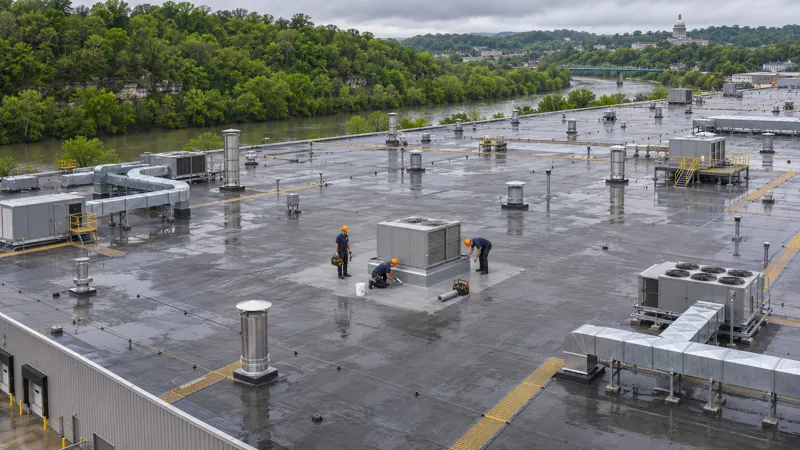
Roof crew repairing a section of a commercial roof
Membrane Roof · Repair at a Failed Detail
  • Stain MappingInterior marks tied to the roof
  • Moisture ChecksMeters, probes, dusk infrared
  • Drains and ScuppersReset, cleared, and reflashed
  • Wet-Weather PatchesTemporary until the roof dries
Source Check

How Commercial Roof Leak Repair Fits Frankfort Roof Types

Frankfort commercial roof leak repair starts with the roof type, because each system has its own weak points and that narrows the search before anyone cuts.

Roof TypeUsual Leak SourcesFirst Detail Checked
TPO and PVCSeam edges, curb corners, pipe bootsWelded laps near the stain
EPDMSeam tape edges, shrinkage at walls, flashing cornersTape edges and wall terminations
Modified bitumenLap edges, blisters, torch-applied wall flashingWall base and lap lines
Built-upCracked flashing, blisters, pitch pansPitch pan filler and wall flashing
Metal panelFastener washers, end laps, ridge caps, wall trimScrew lines upslope of the drip
Leak Sources

Where Frankfort Commercial Roof Leak Repair Usually Starts

Most leaks come from a short list of details where the roof meets something that moves, vibrates, or ages at a different rate than the membrane.

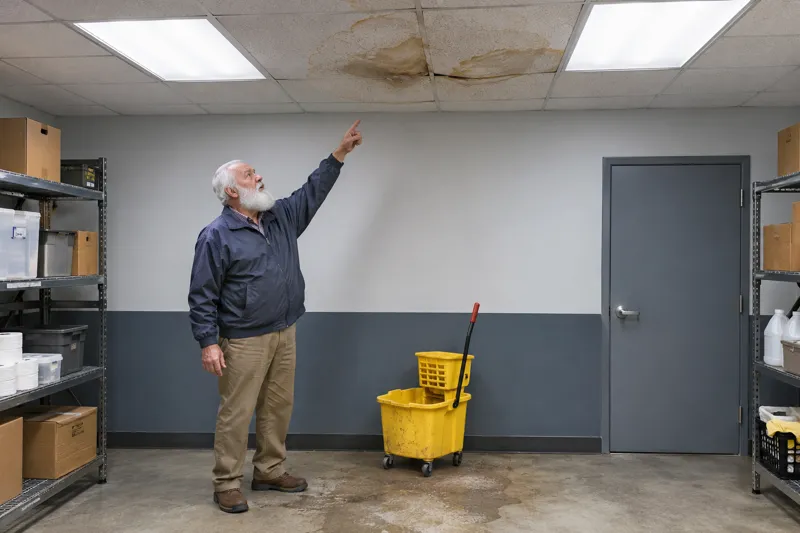
Water stain and drip on a ceiling inside a commercial building

Water Riding the Deck Before It Drips

Steel deck flutes carry water downslope toward walls, purlins move it sideways to a low point, and insulation joints spread it under the membrane. Pipes and conduit then drop it at hangers, so the drip can sit many feet from the hole.

Usually Means: the search starts above the stain and works upslope, one seam, curb, and penetration at a time.
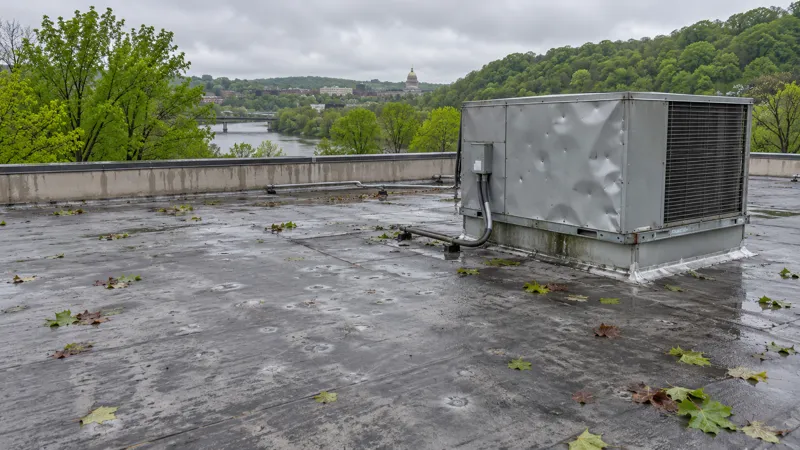
  • Rooftop Unit Curbs

    Sealant fails at curb corners and under the unit flange as equipment vibrates.

  • Shrunken Pitch Pan Filler

    Filler pulls away from the pipe and leaves a gap that lets water in with every rain.

  • Drains Backing Up

    Leaves in the strainer push water over the flashing and into the wall.

  • Wall Flashing in Driving Rain

    Leaks that show only in wind-driven rain often trace to coping or wall flashing above.

Repair Methods

Commercial Roof Leak Repair Options Around Frankfort Roofs

Once the source is found, the fix matches the detail that failed. These four repairs close most commercial roof leaks.

Curb Reflashing

Rooftop unit curbs get new membrane flashing up the curb face, with counterflashing reset where the old fasteners rusted out.

Boots in Place of Pitch Pans

Pitch pans are swapped for prefabricated pipe boots, or refilled sealant pockets where a boot cannot fit the roof penetration.

Drain and Scupper Resets

Membrane is reset into the drain bowl with new clamping ring bolts, and rusted scupper sleeves are replaced with new flanges.

Seam and Lap Rebuilds

Open seams found during tracing get patched with membrane matched to the roof, extended past the opening on every side.

Why Repair

Benefits of Repairing the Leak Source

Fixing the detail that let water in, rather than the spot where it dripped, is what keeps the same leak from coming back.

  • One Fix in the Right Place

    Tracing upslope finds the opening on the first visit, so the ceiling stain stops growing and nobody patches dry membrane by mistake.

    Seams
  • Curbs That Stay Sealed

    New flashing at unit curbs holds up to the vibration that cracked the old sealant at the corners.

    Curbs
  • Drains That Carry Water Away

    A reset drain bowl and a clean strainer keep water from climbing the flashing during heavy storms.

    Drains
  • Wet Insulation Found Early

    Moisture readings during tracing show wet board before it spreads, so the repair stays small.

    Deck

Leak Showing Up Only in Storms?

Leaks that appear only with wind-driven rain often start at coping or wall flashing. Note the wind direction next time and call us to trace it.

Call Us
Tracing Steps

How Leak Tracing Works on Your Roof

Leak tracing moves from inside to the roof, then tests one detail at a time so the source is clear.

  1. Inspect Your Roof

    Stains, drips, and wet ceiling tiles are mapped inside first, then the roof above gets walked at every flashing, lap, curb, and drain upslope of them.

  2. Check for Moisture

    Meters and probes read the membrane, and an infrared scan at dusk can show where wet insulation holds the day's heat.

  3. Water-Test Each Detail

    Controlled water testing starts low and moves up, so each curb, boot, or lap gets tested alone and the leak shows itself.

  4. Rebuild the Source

    The failed detail is rebuilt with matching membrane or flashing, then checked again during the next heavy rain.

Related Services

Repairs That Follow Leak Tracing

Tracing often points to a larger repair on one part of the roof. These services pick up from there.

Aerial view of an industrial plant roof with rooftop equipment

Industrial Roof Repair

Plant roofs with exhaust fans and long drain lines need repairs scheduled around production.

Industrial roof repair
Leak Questions

Roof Leak Repair Questions

How do roofers trace a commercial roof leak to its source?

By matching interior stains to roof features above them and checking every seam, curb, and penetration upslope. Moisture meters, probes, and dusk infrared scans narrow it down, and controlled water testing confirms the source one detail at a time. Leaks that appear only in wind-driven rain often trace to wall flashing or coping.

Where do leaks usually start on each type of commercial roof?

TPO and PVC leak at seam edges, curb corners, and pipe boots. EPDM fails at tape edges and walls where it shrinks, modified bitumen at laps and torch-applied wall flashing, built-up roofs at cracked flashing and pitch pans, and metal roofs at fastener washers and end laps. Clogged drains cause leaks on every low-slope type.

Why do curbs, pitch pans, and pipe boots leak?

They join the roof to things that move, vibrate, or age at a different rate than the membrane. Curb corners lose sealant, pitch pan filler shrinks away from the pipe, boots split at the upper band, and counterflashing pulls off walls when its fasteners rust. Each one gets reflashed, refilled, or replaced.

How are leaks around roof drains and scuppers fixed?

The membrane is reset into the drain bowl or scupper sleeve and cracked or rusted parts are replaced. That means new clamping ring bolts, a drain insert where the bowl is cracked, new metal flanges for rusted scupper sleeves, stripped-in flashing, and strainers that keep leaves out. Fall cleanouts prevent much of the trouble.

Can a roof leak be fixed while it is still raining?

Only temporarily. Wet-surface sealants, rated tapes, and weighted plastic sheeting can slow the water, and clearing a backed-up drain helps right away. The permanent repair waits for a dry roof, because primers, tapes, and welds bond only to clean, dry surfaces. Lightning and high wind keep everyone off the roof.

Call for Frankfort Commercial Roof Leak Repair

Mark where the water shows up inside, note the weather when it happened, and call us. We will trace it from there.

Call Us (606) 221-9219