Industrial Roof Repair · Frankfort, KY

Frankfort Industrial Roof Repair Contractor

Repair Work for Plants, Warehouses, and Production Buildings

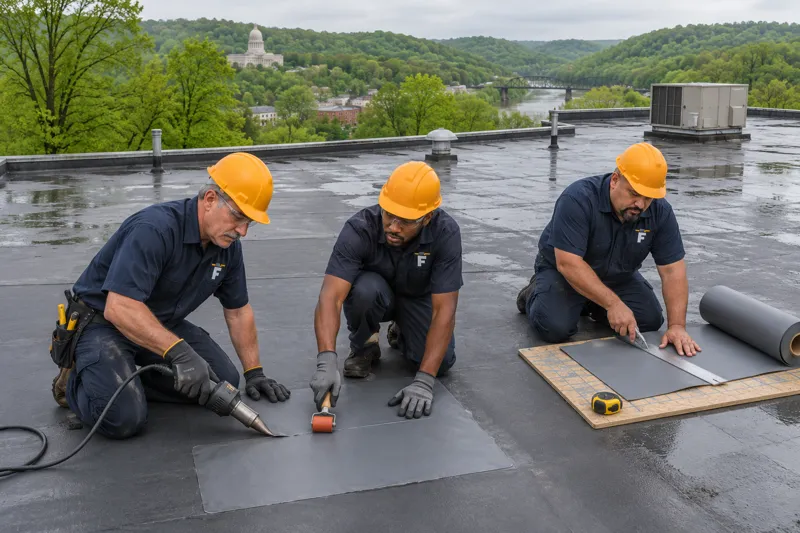
As a Frankfort industrial roof repair contractor, we repair plant roofs around exhaust fans, process vents, and crowded equipment, on a schedule set with your staff.

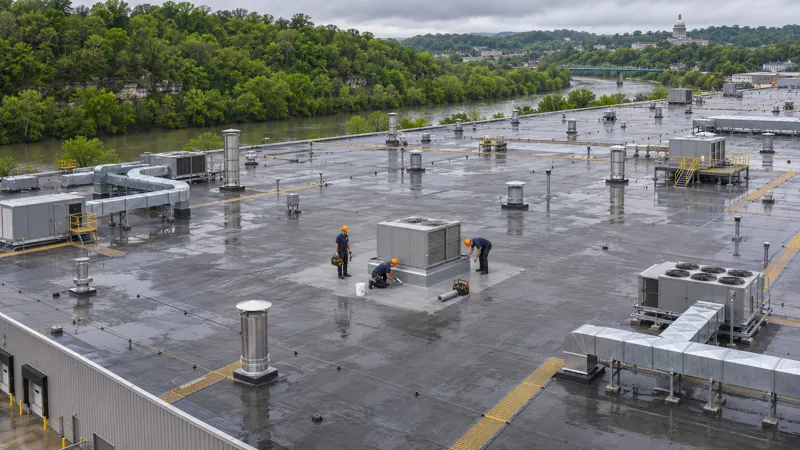
Aerial view of an industrial plant roof with rooftop equipment
Plant Roof · Equipment and Exhaust Curbs
  • Exhaust ResidueMembrane rated for the exposure
  • Shift SchedulingAround shutdowns and deliveries
  • Plant Safety RulesHot-work signoff and fire watch
  • Repair LogsDated plans of every fix
Fit Check

Which Frankfort Plant Roofs Fit Industrial Roof Repair

Frankfort industrial roof repair fits plants where failures cluster around equipment and the rest of the roof field is still dry.

Plant Roof FactorRepair FitsPlan a Larger Section
Exhaust areasSoftened membrane around a few fansResidue damage across a whole bay
Equipment curbsCracked flashing at some curbsCurbs failing across the roof
Storm damageLocal tears, bruises, or lifted edgeHail bruising across the field
DrainsClogged strainers on long linesLow spots that pond on every bay
Repair historyNew problems in new placesOne area patched again and again
Plant Roof Conditions

Plant Roof Conditions That Call for Frankfort Industrial Roof Repair

Industrial roofs face process exhaust, heat, and heavy equipment that office and retail roofs rarely see. These conditions drive most plant repairs.

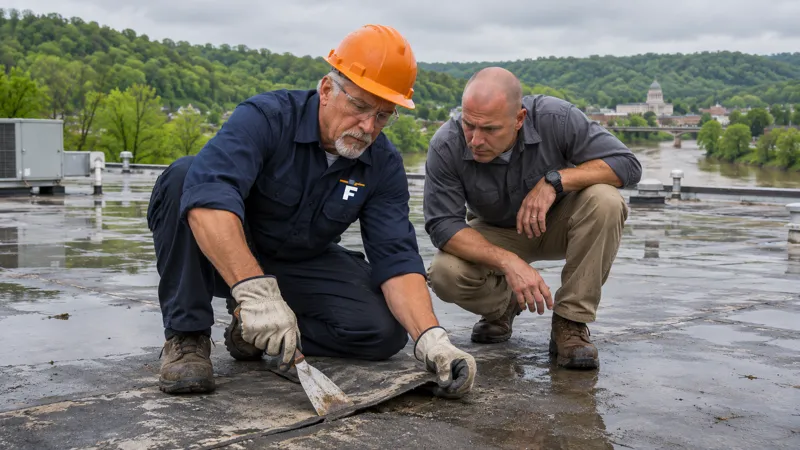
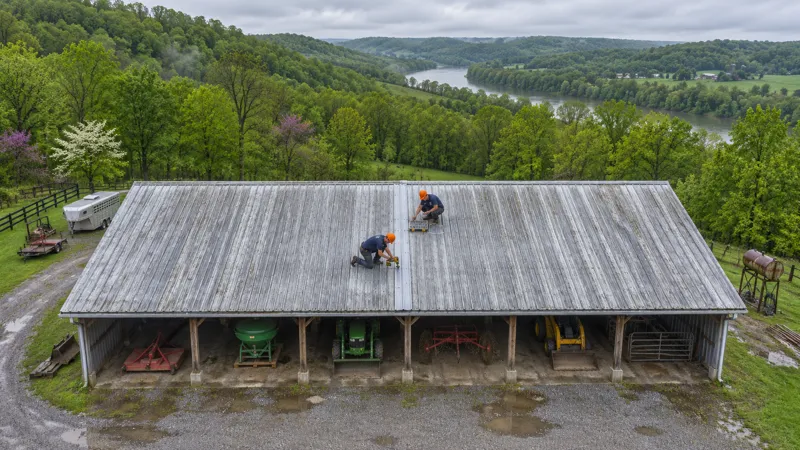
Roofer walking a flat commercial roof to inspect seams and flashing

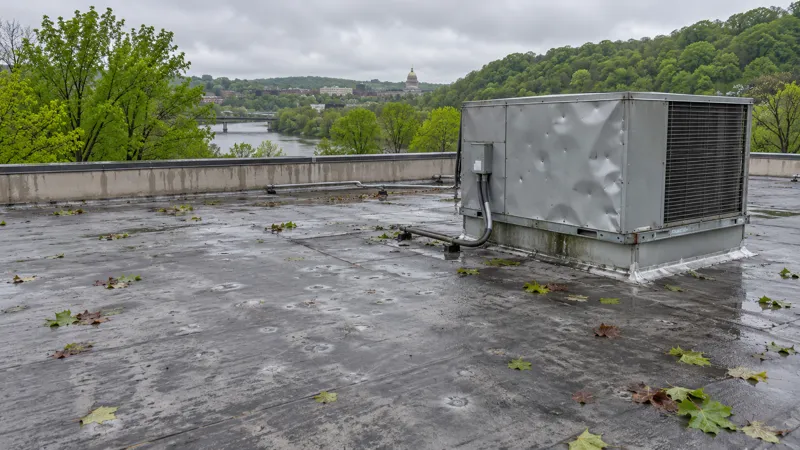
Membrane Softened Around Exhaust Fans

Grease, oil, or chemical residue from process and kitchen exhaust settles on the roof around fans and softens EPDM and TPO until the sheet swells, wrinkles, and splits. Residue also collects at drains downslope of the fans.

Usually Means: the contaminated section needs cutting out and replacing with a resistant membrane.
  • Heat Near Ovens and Vents

    Process heat bakes the membrane beside vents until it cracks and loses flexibility.

  • Cracked Fan Curb Flashing

    Vibration from fans and units opens flashing at curb corners.

  • Storm Damage on Large Roofs

    Wind lifts edge metal and hail bruises the field across wide spans.

  • Long Drain Lines Clogging

    Debris and residue slow long drain runs until water ponds between them.

Repair Methods

Industrial Roof Repair Options Around Frankfort Plant Equipment

Plant repairs pair the right material with the exposure, then add a way to keep the same damage from returning.

Resistant Membrane Sections

Grease-softened EPDM or TPO is cut out and replaced with a compatible PVC or KEE section matched to the plant's exhaust list.

Fan Curb Reflashing

Cracked curb flashing is rebuilt and counterflashing added, so vibration stops opening the corners.

Heat Shields and Pavers

Membrane damaged by heat near vents is replaced, then protected with heat shields or pavers.

Containment at Drains

Grease containment boxes under fans and cleaned drains with filtration keep residue off the membrane.

Why Repair

Benefits of Repairing Your Plant Roof

Targeted industrial repairs keep production running under a dry roof and put each fix where the plant's conditions demand it.

  • Patches That Resist Residue

    Matching chemical resistance to the exhaust coming out of each fan keeps a new section from failing the way the old one did.

    Field
  • Production Keeps Running

    Work is phased around shift changes and shutdowns, and each phase is closed watertight before crews leave for the night.

    Deck
  • Equipment Stays Protected

    Sealed curbs under rooftop units and fans keep water out of electrical gear and process lines below them.

    Curbs
  • A Plan for the Next Budget

    A marked roof plan with every repair's date and method shows when one bay keeps failing and needs larger work.

    Drains
  • Storm Damage Documented

    Dated photos of bruised membrane, lifted edge metal, and cracked smoke vents come before any temporary work, which keeps an insurance claim clear.

    Edges

Plant Roof Hit by a Storm?

Dated photos support an insurance claim, so they come before any temporary work covers the damage. Call us to walk the roof in a grid.

Call Us
Plant Repair Steps

How Plant Roof Repairs Get Scheduled

Industrial repairs start with the plant's own rules and schedule, then move to the roof.

  1. Inspect Your Roof

    After safety training and plant security, crews walk the roof around fans, vents, curbs, and drains, and note the exhaust each fan carries.

  2. Set the Work Window

    Plant staff decide when intakes, fans, and process lines near the roof can go down. Crane or forklift time for membrane rolls and panels is booked ahead.

  3. Clear Hot Work

    Torch and hot-air work proceed under the plant's hot-work signoff with a fire watch, and nearby fresh-air intakes on the roof get closed off.

  4. Repair in Phases

    Small leaks fit one visit. Larger areas run in phases so the roof is watertight overnight, and every fix goes on the roof plan.

Related Services

Other Repairs on Plant Roofs

Plants often mix membrane, metal, and older sections on one campus. These services cover each part.

Industrial Questions

Industrial Roof Repair Questions

What makes industrial roof repair different from other commercial repair?

Plant roofs carry process exhaust, heat, heavy equipment, and long drain lines that office and retail roofs rarely face. Repairs use membranes and sealants rated for those exposures, and every roof visit follows the plant's own safety, lockout, and access rules.

How are roofs repaired around exhaust fans and process vents?

Contaminated membrane comes out and a section resistant to that residue goes in, such as PVC or KEE in place of grease-softened EPDM or TPO. Cracked fan curbs are reflashed, heat-damaged sheet near vents gets shields or pavers, and containment boxes catch future discharge before it reaches the roof.

How is industrial roof repair scheduled around production?

Around shift changes, shutdowns, and deliveries, with plant staff deciding when intakes, fans, and lines can go down. Hot work needs the plant's signoff and a fire watch, roof access runs through security and safety training, and interior areas below get protection from falling debris.

What does a storm damage check on an industrial roof cover?

Edge metal and coping for lifted or bent sections, the membrane field for hail bruises and tears, rooftop units for dents and displaced curbs, skylights and smoke vents for cracked lenses, and drains for blown debris. Large roofs are walked in a grid, and photos are taken before any temporary work.

How are large industrial roofs kept in repair over time?

Through roof walks each spring and fall and after major storms, drain cleanouts before leaf season ends, seam probing near units and busy paths, and walkway pads replaced where worn. A marked roof plan logging each repair shows when one area keeps failing, so that section can be budgeted ahead.

Plan Your Frankfort Industrial Roof Repair

Tell us what the plant runs, which fans vent onto the roof, and when work can happen, and we will plan the visit around it.

Call Us (606) 221-9219