Flat Roof Repair · Frankfort, KY

Frankfort Commercial Flat Roof Repair Contractor

Close Open Laps, Blisters, and Punctures Before Water Reaches the Deck

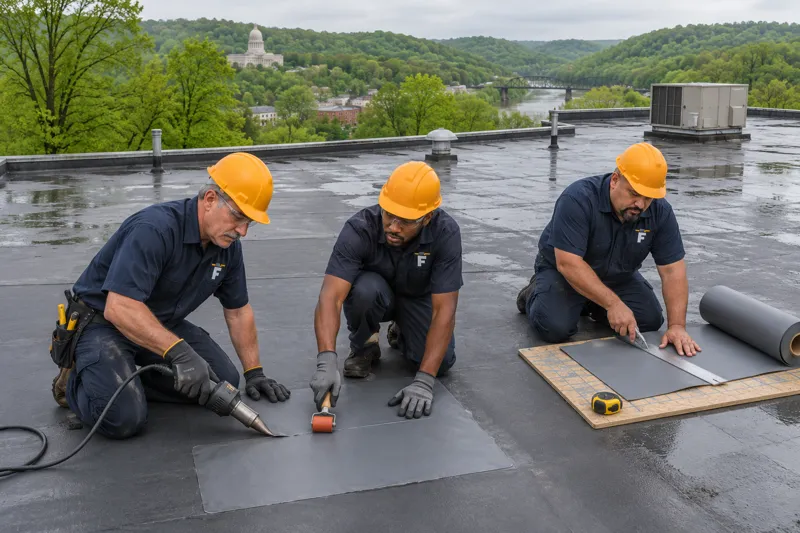
As a Frankfort commercial flat roof repair contractor, we weld, tape, and patch TPO, EPDM, PVC, modified bitumen, and built-up roofs with material matched to each membrane.

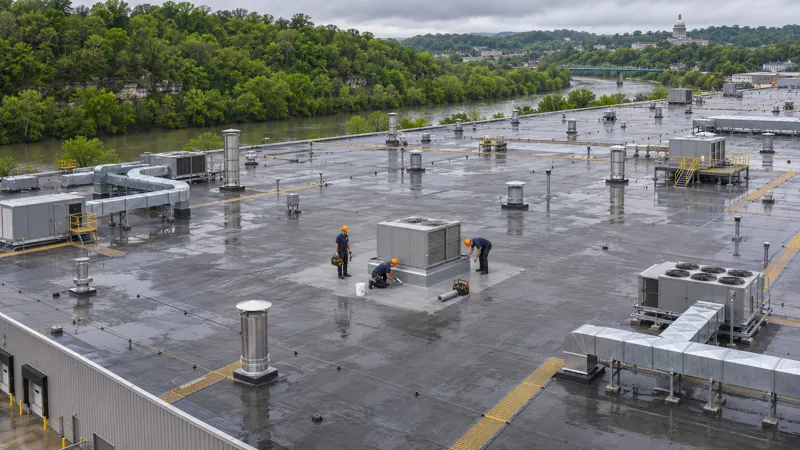
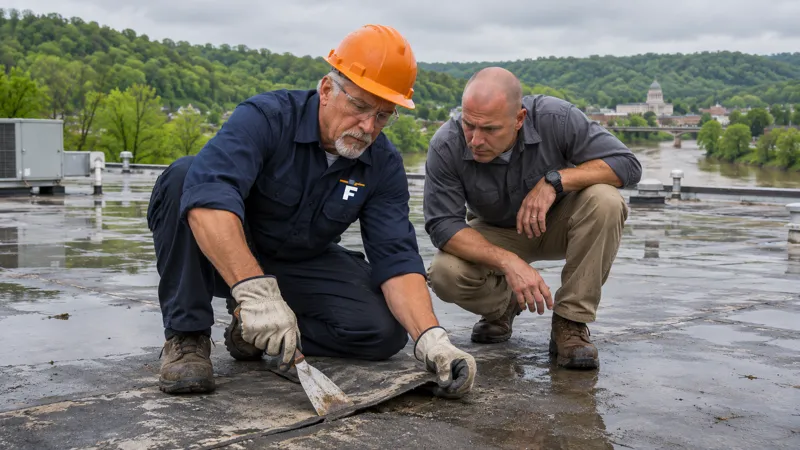
Roofer walking a flat commercial roof to inspect seams and flashing
Flat Roof · Seam and Flashing Check
  • Five Membrane TypesTPO, EPDM, PVC, mod bit, built-up
  • Matched Seam MethodsWelded, taped, or cap-patched
  • Ponding TracedDrain, sump, or cricket fixes
  • Wet Board RemovedBefore any patch goes on
Fit Check

When Commercial Flat Roof Repair Fits a Frankfort Roof

Frankfort commercial flat roof repair fits roofs where the damage is local and the insulation underneath is still dry.

Roof FactorRepair FitsLook at Restoration or Replacement
Leak countOne area or a few separate spotsNew leaks every season in new places
InsulationDry under and around the openingWet readings across large sections
MembraneFlexible and still taking welds or tapeBrittle, shrinking, or refusing new patches
SeamsA few open laps or T-jointsLaps opening along whole runs
BlistersA handful, firm and away from trafficBlisters spread across the whole field
Flat Roof Conditions

Conditions That Lead to Frankfort Commercial Flat Roof Repair

Water sits longer on a low-slope roof, so every weak detail gets tested with each rain. These are the conditions we repair most on flat roofs.

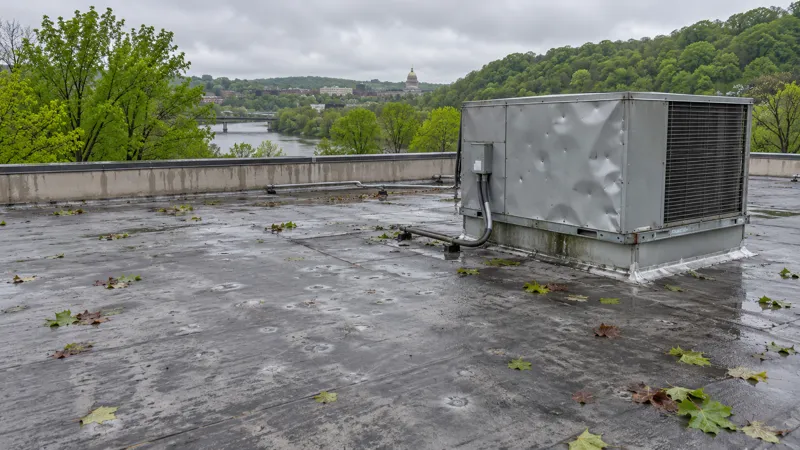
Close view of a commercial roof surface during a condition check

Base Flashing Pulling Away From the Parapet

Flashing at walls, curbs, and drains is where most flat roof leaks begin. As the membrane ages and shrinks, base flashing lifts at the wall and opens a path straight down the inside face of the parapet.

Usually Means: the wall flashing needs re-adhering or replacing, plus a check of the nearby laps.
  • Open Laps and T-Joints

    Seams lift at their edges and at three-way joints where welds or tape thin out.

  • Punctures Near Rooftop Units

    Dropped screws, tools, and metal shavings from HVAC work pierce the sheet around equipment.

  • Water Standing Two Days After Rain

    Clogged strainers, high drains, or deck sag leave ponds that wear seams and feed algae.

  • Blisters on Built-Up and Mod Bit

    Trapped moisture swells between plies in summer heat and can split the surface open.

Repair Methods

Commercial Flat Roof Repair Methods We Use in Frankfort

Each membrane bonds its own way, so the repair method follows the sheet already on your roof.

TPO and PVC Seam Welds

Membrane cleaner goes on first, then a hot-air welded cover patch over the open lap. Older TPO gets a small test weld, since a weathered surface can resist bonding.

EPDM Tape and Cover Strips

Clean, prime, and set pressure-sensitive seam tape or a cover strip that runs past the opening on both sides onto firm rubber.

Modified Bitumen Cap Patches

Laps get reheated or set in cold adhesive, then a granulated cap patch covers the repair to shield it from sun and foot traffic.

Built-Up Roof Ply Rebuilds

Blistered plies are cut out and rebuilt with new felts and bitumen once the insulation beneath them is dried or replaced.

Why Repair

Benefits of Repairing Your Roof

Flat roof repairs pay off where the problem starts: the seam, drain, or curb that let water in.

  • Matched Patches Hold

    A welded TPO patch or taped EPDM strip bonds into the existing sheet, so the repair moves with the roof through hot afternoons and cold snaps.

    Seams
  • Shorter Ponding Times

    Clearing a strainer, lowering a drain bowl, or adding tapered crickets gets water off the roof faster and takes daily stress off nearby laps.

    Drains
  • Tight Curbs Around Units

    Reflashed curbs and new pipe boots close the openings around rooftop units, where flat roofs take on water most often.

    Curbs
  • Dry Insulation Protected

    Cutting out the wet board under a puncture keeps the deck and surrounding insulation dry, which keeps the roof on the repair path longer.

    Deck

Water Standing on Your Flat Roof?

Ponds still there two days after rain mark the spots that need drain work or tapered fill. Call us to set up a roof walk and a look at the drains.

Call Us
Repair Steps

How a Flat Roof Repair Visit Runs

Flat roof repairs follow a set order so every patch bonds to clean, dry membrane.

  1. Inspect Your Roof

    Moisture meters and probes check the membrane around each stain location, and every lap, curb, and drain nearby gets a close look before anything is cut.

  2. Cut Out Wet Material

    Saturated insulation under the opening is removed and replaced, since a patch laid over wet board traps water under the new material.

  3. Clean, Prime, and Patch

    Membrane cleaner comes first, then primer where the system calls for it, then a patch that runs past the opening on every side.

  4. Clear the Drains

    Strainers, drain bowls, and scuppers on that section get cleared so the next rain runs off the roof and away from the new work.

Related Services

Other Repairs for Frankfort Roofs

Flat roofs often share a building with metal sections or plant equipment. These services cover the rest of the roof.

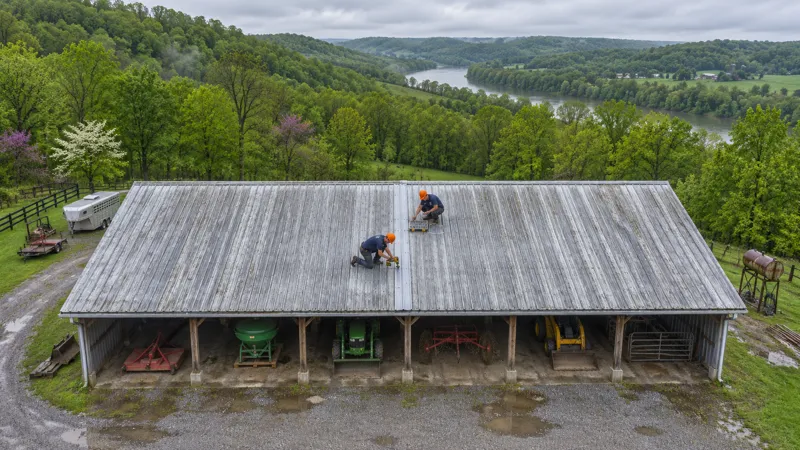
Roof crew repairing a section of a commercial roof

Commercial Roof Leak Repair

When the stain inside sits far from any obvious opening, leak tracing finds the water path before a patch goes on.

Commercial roof leak repair
Aerial view of an industrial plant roof with rooftop equipment

Industrial Roof Repair

Plant roofs add exhaust residue and heat around fans, which need membrane rated for that exposure.

Industrial roof repair
Flat Roof Questions

Flat Roof Repair Questions

What causes most leaks on flat commercial roofs?

Flashing failures at curbs, walls, and drains cause most of them, with open seams and punctures close behind. Water sits on a low-slope roof long enough to test every weak spot.

Pitch pans with shrunken filler and clogged scuppers add to the list, so a full walk around the main leak tends to turn up a second problem worth fixing on the same visit.

How are open seams repaired on TPO, EPDM, PVC, and modified bitumen?

Each membrane gets its own method. TPO and PVC are cleaned and hot-air welded, EPDM is primed and taped, modified bitumen laps are reheated or cold-adhered under a cap patch, and built-up plies are rebuilt. Every patch extends past the opening onto clean, firm membrane on all sides.

Can blisters on a built-up roof be repaired?

Active blisters can. The blister is cut open, the plies and insulation underneath are dried, the flaps are re-adhered, and a patch covers the cut with overlap all around. Small firm blisters away from foot traffic are often left and checked at the next roof walk. Blisters across the whole field point to moisture in the system.

How do you fix ponding water on a flat roof?

Start with the simplest cause, since clearing a clogged strainer fixes many ponds. A drain set above the low spot gets a sump or a lowered bowl, missing crickets behind curbs get added, and an undersized scupper gets enlarged or paired with an overflow. Deck sag between joists needs a structural check before tapered fill.

What is the repair for a membrane puncture from foot traffic?

A patch of matching membrane, welded on TPO and PVC or taped on EPDM, that extends past the hole on every side. If water already went through, the wet insulation below gets cut out first. Walkway pads along service routes and a cleanup check after HVAC work keep new punctures down.

Book Frankfort Commercial Flat Roof Repair

Tell us the membrane type if you know it and where water shows up inside, and we will set up the roof walk.

Call Us (606) 221-9219